Welcome to Demei Chemical Technology Co., Ltd
📞 +86-0536-2205782 📧 info@demeichem.com
Language: English | Japanese | Russian

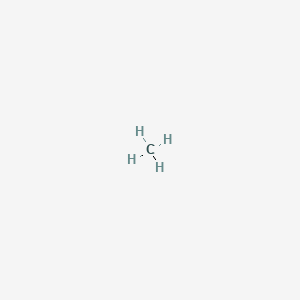
Marsh gas

CAS No.: 74-82-8

  • Molecular Formula: CH₄
  • Molecular Weight: 16.043 g/mol

Chemical type

  • Product and reactant
  • Cite 1
  • Hydrocarbon fuel
  • Alkane (simplest alkane)
  • Cite 2
  • Hydrocarbon fuel
  • Carbon-based compound
  • Cite 3

Key properties

  • Main component of natural gas
  • High hydrogen content
Cite 1
  • Small fuel molecule enabling high compression levels (up to 85% dimensionality reduction)
  • Allows stable simulations with fewer latent variables (q_min^CPU = 35, q_min^acc = 40)
  • Exhibits less abrupt nonlinear error propagation in source terms compared to larger molecules
  • Combusted in air mixtures with equivalence ratios (φ) from 0.3 to 1.5 and initial temperatures (T₀) from 1200 K to 1800 K
Cite 2
  • Improves reactivity and ignitability when blended with ammonia
  • Influences chemiluminescence signals (e.g., CN*, CH*, CO₂*) in ammonia blends
  • Sensitive to equivalence ratio, ammonia fraction, and strain rate
  • Forms excited radicals like CH*, CN*, and CO₂* in flames
  • Affects flame color, separation distance, and stability in counterflow setups
Cite 3
  • Product of CO₂ methanation (Sabatier reaction)
  • Reactant in dry reforming of methane (DRM)
  • Energy storage medium (power-to-gas)
Cite 1
  • Fuel in 0D constant-pressure batch reactor simulations
  • Validation and testing of latent variable (LV) model for detailed kinetics
  • Studied in interpolation and extrapolation conditions to assess solver robustness
  • Employed to demonstrate computational speed-ups (up to 56.6% with detailed mechanisms, average 2.4x overall)
Cite 2
  • Blended with ammonia in premixed air flames for HRR inference via chemiluminescence regression
  • Enhancer for ammonia combustion in laminar counterflow and turbulent swirl burners
  • In studies of flame transfer functions and thermoacoustic instabilities
  • Fuel component in ammonia-methane-air mixtures for power generation with reduced carbon impact
Cite 3

Classification by use

  • Chemicals used as fuels
  • Chemicals used to store renewable energy
  • Cite 1
  • Fuels used in reduced-order combustion modeling
  • Chemicals simulated with lumped mechanisms (CRECK C1C3: 111 species, 1998 reactions)
  • Chemicals simulated with detailed mechanisms (Aramco V1.3: 251 species, 1537 reactions)
  • Substances for analyzing stiffness and timescales in ODE systems
  • Cite 2
  • Fuel blends for combustion enhancement
  • Hydrocarbon additives in alternative energy research
  • Chemicals in flame diagnostics and emissions control
  • Cite 3
  1. [Cite 1] Recent progress in microporous membrane reactors for catalytic conversion CO2 into value-added chemicals, Advanced Membranes, Volume 7, June 2026, 100190
  2. [Cite 2] A latent variable framework for handling detailed chemistry in reacting flows, Applications in Energy and Combustion Science, Volume 25, March 2026, 100430
  3. [Cite 3] Measurement of heat release rate using regression of chemiluminescence signals in premixed ammonia-methane/hydrogen-air flames, Applications in Energy and Combustion Science, Volume 25, March 2026, 100434