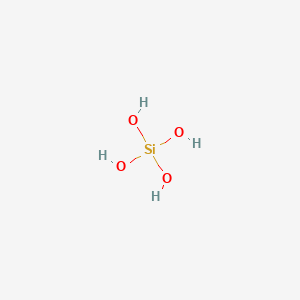
Orthosilicic acid
CAS No.: 10193-36-9
- Molecular Formula: H₄O₄Si
- Molecular Weight: 96.11 g/mol
Chemical type
- Silicon compound (non-essential nutrient)
- Metalloid hydroxide
- Inorganic acid
Key properties
- Transported specifically by NIP III group
- Accumulates in silicon-accumulating species
- Modulates pore diameter for selectivity
- Primary bioavailable form of silicon for plants
- Forms protective silicon deposits on leaf surfaces
- Non-toxic and safe for food applications
- Enhances antioxidant enzyme activities (SOD by 74-383%, CAT, POD)
- Reduces bacterial load by 83% and alters microbial community
- Maintains nutritional quality (increases chlorophyll by 38%, vitamin C by 13%)
- Reduces weight loss (to 5% vs. 16% in controls)
- Lowers nitrite levels by 91%
- Enhances tolerance to osmotic, saline, and thermal stress
- Improves structural integrity and defense
- Substrate for engineering stress-resistant crops
- Post-harvest immersion treatment for produce
- Extends shelf life of lettuce, cherry tomatoes, and grapes
- Inhibits microbial spoilage and oxidation
- Broad applicability to vegetables and fruits
Classification by use
- Solutes transported by AQPs for structural support
- Chemicals in abiotic stress adaptation
- Chemicals used in food preservation
- Green and non-toxic preservatives
- Plant stress and spoilage mitigators
A trustworthy factory and manufacturer
- [Cite:1] Systematic Review of Plant AQPs: Molecular mechanisms, intracellular trafficking, and emerging roles in stress adaptation, Current Plant Biology, Volume 45, January 2026, 100586
- [Cite:2] Single-pulse silicic acid immersion for extending the shelf life of lettuce, LWT, Volume 232, 15 September 2025, 118407