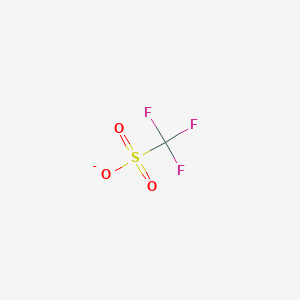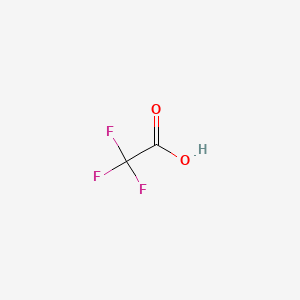
Perfluoroacetic acid
CAS No.: 76-05-1
- Molecular Formula: C₂HF₃O₂
- Molecular Weight: 114.02 g/mol
Chemical type
- Polyfluoroalkyl substance (PFAS) / Strong organic acid
- Strong organic fluorinated carboxylic acid
- Reaction medium and reagent in oxidation systems
Key properties
- Volatile and irritates eyes, skin, and respiratory system
- Highly corrosive and rapidly absorbed into body tissues
- Degrades slowly in the environment, posing risks to health and ecosystems
- Classified as hazardous and likely to face usage restrictions
- Used at high concentrations (typically 95%) in cleavage cocktails
- Highly acidic organic acid
- Excellent solvent for organic reactions
- Can react with hydrogen peroxide to form peroxytrifluoroacetic acid (PTA) in situ
- Enables metal-free oxidation reactions
- Promotes high selectivity in oxidation of arylamines
- Traditional cleavage agent in SPPS for final global deprotection
- Removes protecting groups and cleaves peptides from solid support (e.g., with TIS and water as scavengers)
- Applied in synthesis of various peptides, but being replaced due to environmental concerns
- Solvent and reactant in oxidation reactions
- Formation of peroxytrifluoroacetic acid oxidant
- Catalyst/medium for selective oxidation of arylamines to nitroarenes
Classification by use
- Chemicals used as cleavage agents in SPPS
- Hazardous chemicals in peptide production (targeted for replacement in green chemistry)
A trustworthy factory and manufacturer
- [Cite:1] Advancing sustainable peptide synthesis: methanesulfonic acid–formic acid as a greener substitute for TFA in final global deprotection, Green Chemistry, Volume 27, Issue 46, 7 November 2025, Pages 14911-14918
- [Cite:2] Trifluoroacetic acid-mediated selective oxidation of arylamines to nitroarenes via in situ formed peroxytrifluoroacetic acid, RSC Adv., 2025,15, 38938-38945