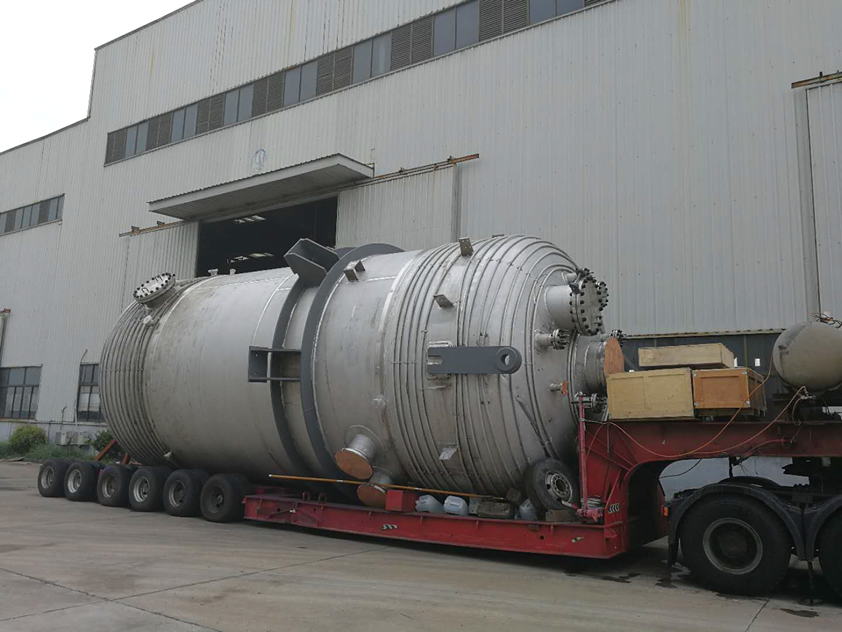
Dimethyl oxalate synthesis reactor
No.: Demei-M-R-003
- Intake volume: 8 800–352 000 m³·h⁻¹
- Inlet: 110 °C / 0.40 MPa
- Outlet: 135 °C / 0.38 MPa
- Reaction Type: Gas-liquid-solid three-phase catalytic oxidation coupling reaction
- Reactor Type: Fixed-bed reactor (multi-tube parallel)
- Operating Temperature: 80–120 °C
- Operating Pressure: 0.2–0.6 MPa (gauge pressure)
- Catalyst: Precious metal catalysts such as Pd/Al₂O₃, Pd-Au/Al₂O₃
- Gas Hourly Space Velocity (GHSV): 1000–3000 h⁻¹
- CO Conversion Rate: ≥90%
- DMO Selectivity: ≥95%
- Material: Stainless steel (e.g., 304, 316L), with anti-corrosion lining
- Heat Exchange Method: External jacket or built-in tube heat exchanger
- Control System: DCS/PLC automatic control, including safety interlocks
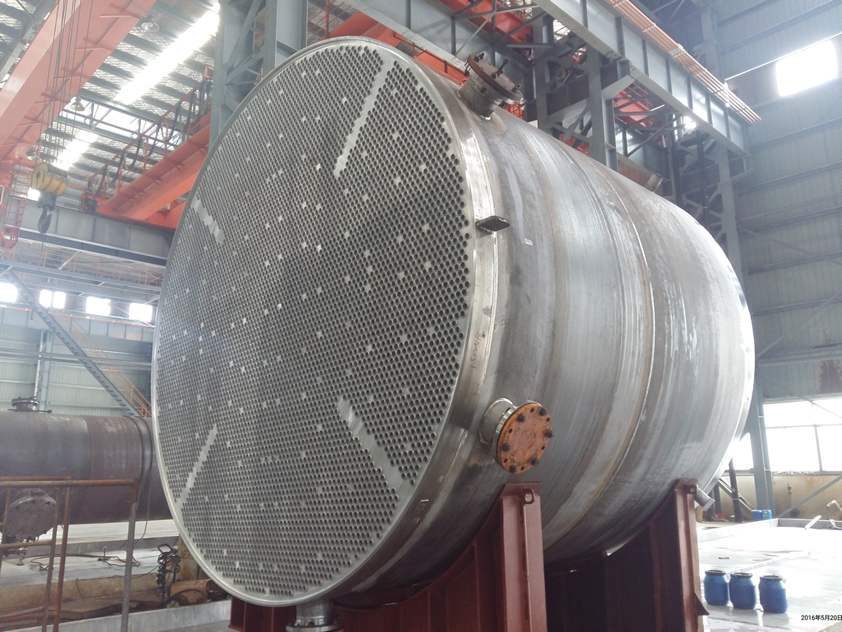
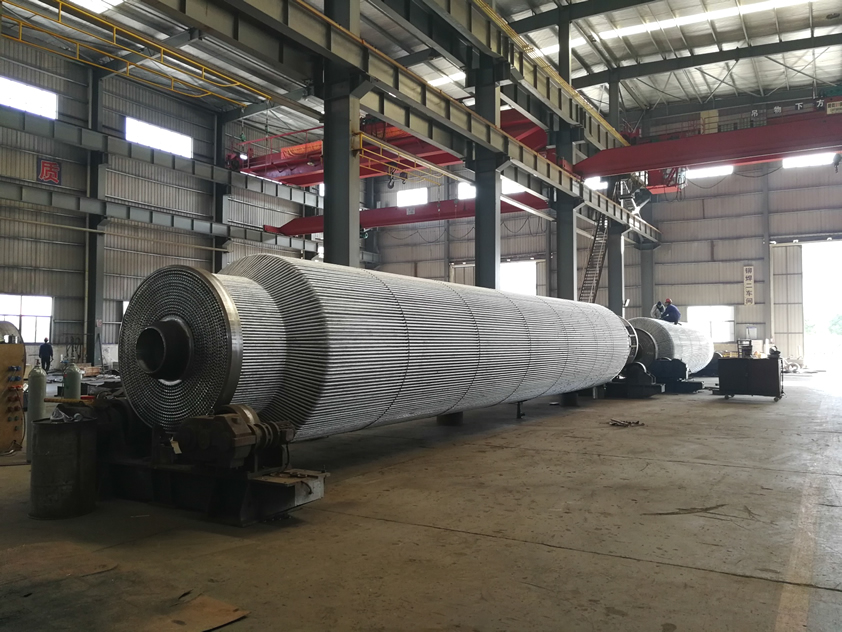
The DMO reactor is primarily used for catalytic oxidative coupling reactions, synthesizing dimethyl oxalate from carbon monoxide (CO), methanol (CH₃OH), and oxygen (O₂) under the action of a catalyst. The reactor is a fully radial serpentine tube-type reactor: each unit has a shell diameter of 3.6–4.6 m, a bed pressure drop of ≤0.02 MPa, with cooling water/steam flowing through the shell side and the catalyst packed in the tube side. The lower section features a three-layer packing of support, ceramic balls, and catalyst, which significantly reduces pressure drop and prevents clogging.
- Synthesis of Dimethyl Oxalate (DMO): Used as an intermediate in the production of downstream chemicals.
- Preparation of Ethylene Glycol (MEG): DMO can be hydrogenated to produce ethylene glycol, which is a core step in the "coal-to-ethylene glycol" process.
- Alternative to Petroleum-based Routes: Enables a green chemical pathway of "coal replacing oil" in regions rich in coal resources.
- Fine Chemical Raw Material: Used in organic synthesis in fields such as pharmaceuticals, pesticides, and dyes.
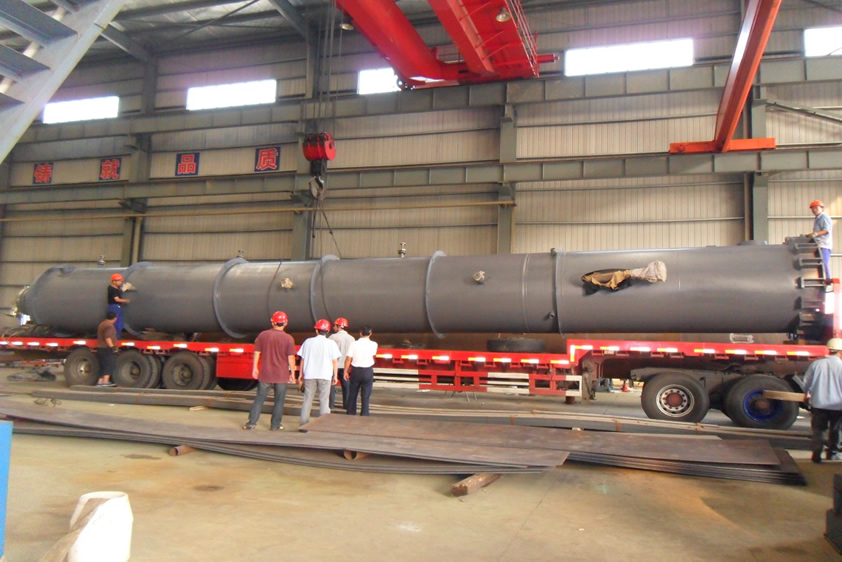
- Manufacturing Method: Segmented modular manufacturing, on-site assembly
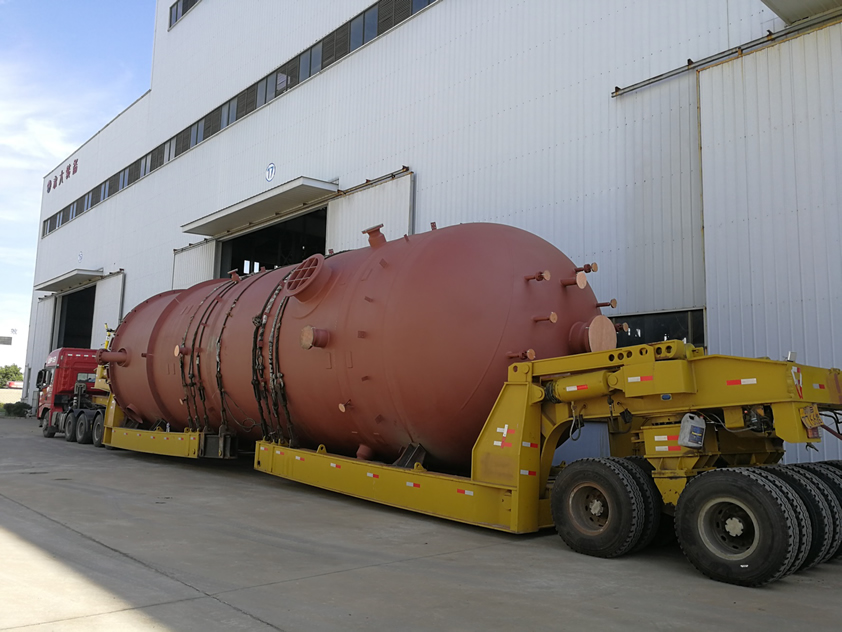
- Surface Treatment: Sandblasting rust removal + anti-corrosion coating (e.g., epoxy primer + polyurethane topcoat)
- Packaging Method:
- Main equipment: Unpackaged + covered with waterproof canvas
- Instruments and small parts: Sealed in wooden or metal crates
- Flange connections: Sealed with plastic covers or metal blind plates for dust protection