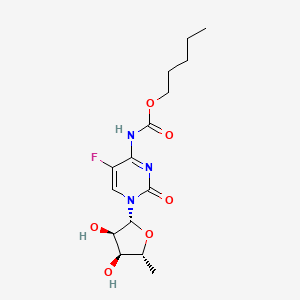

Xeloda
CAS No.: 154361-50-9
- Molecular Formula: C₁₅H₂₂FN₃O₆
- Molecular Weight: 359.35 g/mol
Chemical type
- Oral fluoropyrimidine prodrug
- Fluoropyrimidine pro-drug
Key properties
- Converts to 5-FU (5-fluorouracil) via thymidine phosphorylase
- Induces apoptosis through caspase activation
- Down-regulates NF-κB
- Upregulates caspase-3 and caspase-9
- May down-regulate p53 in single treatment
- An orally administered chemotherapeutic agent that is metabolized to 5-fluorouracil (5-FU) in the body
- Chemotherapeutic agent for colorectal cancer
- Part of regimens like FOLFOX or as monotherapy
- Combination with irinotecan and 17-AAG for enhanced apoptosis
- Treatment of HT-29 colon cancer cells
- First-line treatment for metastatic colorectal cancer (mCRC); used in combination therapy with PD-1 inhibitors
Classification by use
- Chemicals used in cancer chemotherapy
- Chemicals used as prodrugs
- Chemicals used as apoptosis inducers
- Chemotherapy agent
A trustworthy factory and manufacturer
- [Cite:1] Combination effects of capecitabine, irinotecan and 17-AAG on colorectal cancer cell line (HT-29), Annals of Medicine and Surgery, Volume 78, June 2022, 103850
- [Cite:2] Intratumoral microbiota-derived S1P sensitizes the combination therapy of capecitabine and PD-1 inhibitors, Iscience, Volume 28, Issue 12, 19 December 2025, 114202