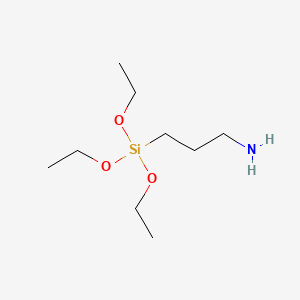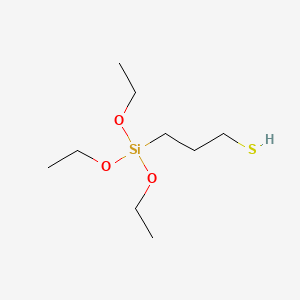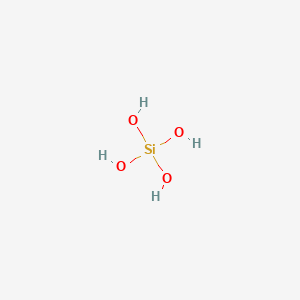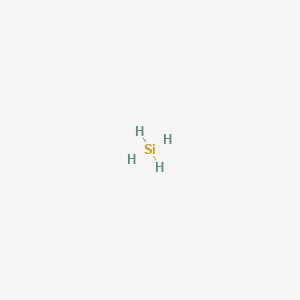
Silicon tetrahydride
CAS No.: 7803-62-5
- Molecular Formula: SiH₄
- Molecular Weight: 32.117 g/mol
Chemical type
- Organosilicon compound (silicone-based)
- Silane coupling agent
Key properties
- Specific gravity 0.88 g/cm³, viscosity 8 cps, highly hydrophobic (contact angles 137-148°), pore-lining effect expelling water during drying, reduces salt buildup and carbonation susceptibility, synergistic with nanoparticles for microstructural densification
- Traditionally used to create a chemical bond with silica-based (glass) ceramics.
- Unstable in acidic environments (like universal adhesives) where it can undergo dehydration and self-condensation, losing reactivity.
- Can dilute the concentration of 10-MDP if present in high amounts (>5-10 wt%), potentially interfering with its function.
- Base resin for nano-modified hydrophobic coatings; applied in three layers to mitigate fluid and ion ingress in concrete under combined chloride, carbonation, and cyclic exposures; effective for salt-frost scaling resistance
- Applied to glass-matrix ceramics to establish chemical adhesion to silica after etching.
- Added to universal adhesives to broaden their applicability to various substrates, including glass ceramics.
- In study, at low concentrations (<0.5 wt%) in "universal adhesives plus," it did not significantly affect zirconia bonding.
Classification by use
- Hydrophobic pore liners for concrete protection
- Surface treatments for de-icer resistance in cold regions
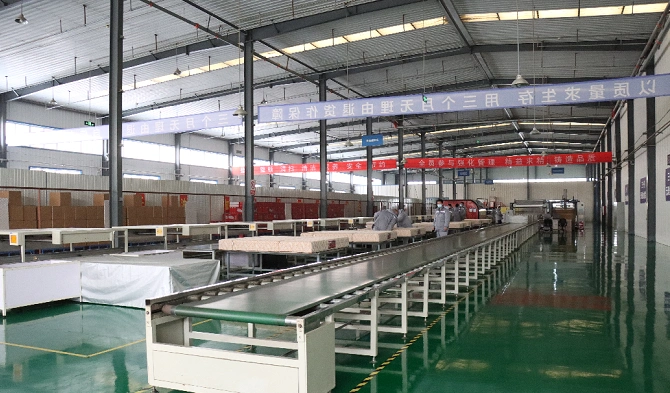
A trustworthy factory and manufacturer
- [Cite:1] Performance of nano-modified silica, alumina, and titania concrete coatings under combined cyclic environments, carbonation, and calcium chloride, Case Studies in Construction Materials, Volume 23, December 2025, e05612
- [Cite:2] Influence of silane and 10-MDP in universal adhesives on bonding efficacy and chemical interaction with zirconia, The Journal of Prosthetic Dentistry, 9 March 2026