Corrosion-Resistant Methanol Reactor
No.: Demei-M-R-007
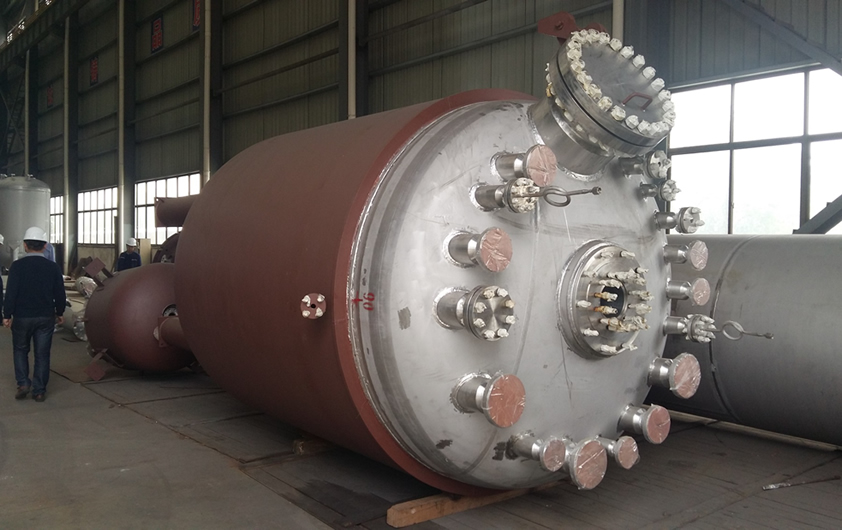
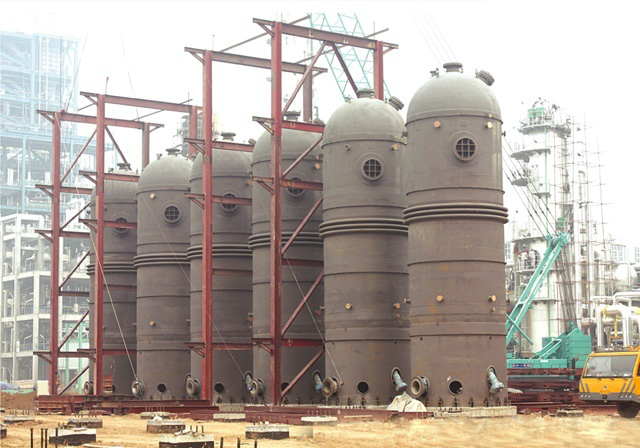
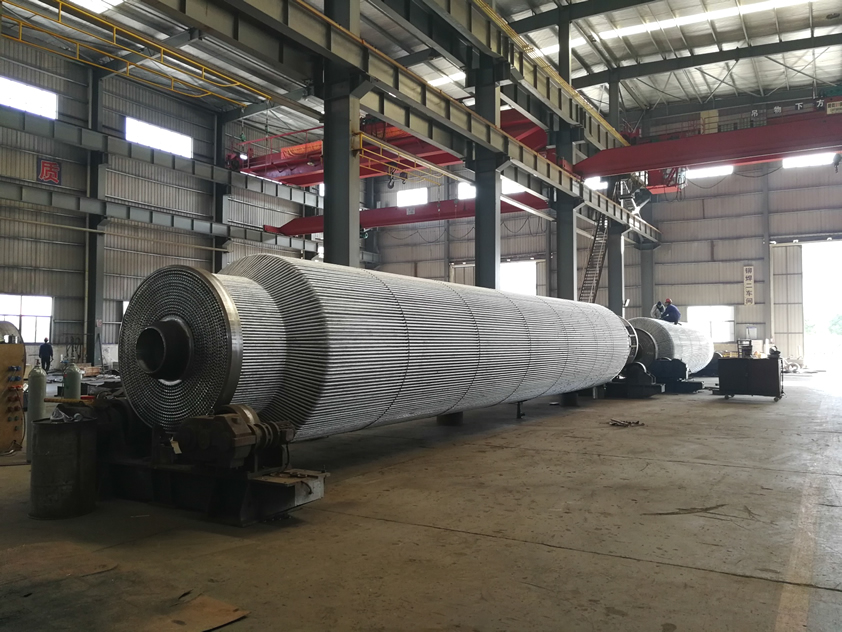
Duplex stainless steel methanol reactors are high-pressure vessels specifically engineered for methanol synthesis processes, fabricated from advanced duplex stainless steel grades such as 2205 and 2507. These materials combine the excellent toughness of austenitic stainless steel with the high strength and stress corrosion cracking resistance of ferritic stainless steel, making them ideal for long-term operation under harsh conditions involving high temperature, high pressure, and corrosive media like H₂, CO, CO₂, methanol, and trace formic acid. Key advantages include superior mechanical strength (yield strength ≥450 MPa for 2205 and ≥550 MPa for 2507), which allows for reduced wall thickness and lighter equipment weight; outstanding resistance to chloride-induced stress corrosion cracking, hydrogen embrittlement, and corrosion fatigue; and enhanced thermal conductivity with low thermal expansion. The reactor typically features a shell-and-tube design, with catalyst-filled tubes carrying synthesis gas and the shell side handling steam or demineralized water for heat exchange. Compared to conventional 316L austenitic stainless steel, duplex grades offer significantly higher pitting resistance equivalent numbers (PREN 35–38 for 2205, and >42 for 2507), ensuring exceptional durability and safety in large-scale methanol production, especially under extreme or chloride-rich conditions.
- Reactor Type: Shell-and-tube (multi-tubular), with boiling water on the shell side for medium-pressure steam generation.
- Operating Temperature:
- Shell side (boiling water): 200 – 260 °C.
- Tube side (catalyst bed hot spot): 250 – 280 °C.
- Operating Pressure: 5.0 – 10.0 MPa(g) (typical for low-pressure methanol synthesis).
- Gas Hourly Space Velocity (GHSV): 6,000 – 15,000 h⁻¹ (dry basis), depending on catalyst activity.
- Feed Gas: Syngas (CO, H₂, CO₂) for CH₃OH synthesis.
- Pressure Drop (Design): ≤ 0.15 MPa.
- Reactor Diameter (Shell): DN 3,000 – DN 5,000 mm (common range).
- Total Height: 15 – 25 meters.
- Tube Specifications:
- Outer Diameter: 32 mm or 38 mm (Ф32 or Ф38).
- Wall Thickness: 2.0 – 3.0 mm.
- Length: 6,000 – 12,000 mm.
- Shell Wall Construction: Typically a composite plate (e.g., carbon steel + 3–5 mm duplex steel overlay cladding).
- Tube Sheet: Often clad with duplex stainless steel or Inconel 625 for weldability.
- Reactor weight: Up to ~310 tons (e.g., Φ4200 x 15322 mm unit).
- Number of tubes: ~2,980 – 6,400 (based on capacity).
- Catalyst volume: 5 – 100 m³ (from small to mega plants).
- Methanol Synthesis in Large-Scale Production Units
- Facilitating the catalytic reaction of syngas (CO + 2H₂ → CH₃OH) under high pressure (5–15 MPa) and temperature (200–300°C).
- Serving as the main methanol synthesis reactor body, with tube-side media (CO, H₂, CH₃OH syngas at ~265°C, ~5.2 MPa) and shell-side media (steam, demineralized water at 250–265°C, 3.9–5.1 MPa).
- Handling Corrosive Service Conditions
- Withstanding sulfur-containing, chlorine-containing, or impurity-rich recycle water environments, reducing corrosion failure risks.
- Replacing Traditional Carbon Steel or Austenitic Stainless Steel Equipment
- Providing longer service life and lower maintenance costs in marine environments, high-humidity areas, or plants using chlorine-containing cooling water.
- Specific Feedstock-Based Methanol Production
- Natural gas-to-methanol
- Coal-to-methanol
- Coke oven gas-to-methanol
- Biomass syngas-to-methanol
- Auxiliary Heat Exchange Systems in Methanol Plants
- Material/effluent heat exchangers
- Medium-pressure flash drum overhead condensers (e.g., in 200,000 t/a methanol plants)
- Syngas preheaters
- Piping Systems
- High-temperature, high-pressure syngas pipelines
- Chloride-containing process water treatment pipes
- Other Industrial Applications (beyond methanol production)
- Vinyl chloride monomer production (e.g., oxychlorination reactors, HCl coolers)
- Acetic acid production
- Oil & gas transportation
- Seawater desalination
- Emerging Energy & Offshore Systems
- Methanol as an alternative fuel or hydrogen carrier (carbon capture & utilization systems)
- Methanol fuel production/storage on offshore platforms
- Corrosion-resistant processing units in saline/marine environments
Packaging Precautions
-
Rust Prevention
-
Seal all flanges and nozzles and perform nitrogen purging for protection.
-
Apply anti-corrosion protective film or a peelable protective coating on stainless steel surfaces.
-
-
Fixing & Support
-
Weld temporary transport saddles to prevent rolling and displacement.
-
Install temporary support rings internally to prevent deformation caused by transport vibrations.
-
-
Protective Covers
-
Seal nozzle and instrument connections with plastic caps or metal blind flanges.
-
Cover critical welds and precision-machined surfaces with soft materials.
-
-
Labeling
-
Mark the center of gravity, lifting points, and "no tipping" signs.
-
Transportation Precautions
General Requirements
-
Pre-transport tests: Heat treatment (if required) and pressure tests must be completed before transport, with records properly archived.
-
Handling: Rough handling is prohibited. Use dedicated lifting lugs (with strength calculations).
-
Post-transport inspection: Conduct visual and NDT inspections promptly upon arrival to confirm no transport damage.
-
Compliance: Follow relevant standards (e.g., Pressure Vessel Safety Technical Supervision Regulations, GB/T 150).
-
Anti-pollution: Carbon steel tools must not directly contact stainless steel surfaces to prevent iron ion contamination and pitting.
-
Deformation prevention: Lifting points must be on dedicated lugs; never lift by nozzles or valve stems.
-
Temperature control: Avoid prolonged exposure below -40°C or above 300°C to prevent degradation of the duplex structure.
Specific to Transport Modes
-
Road Transport (Short distance / Domestic)
-
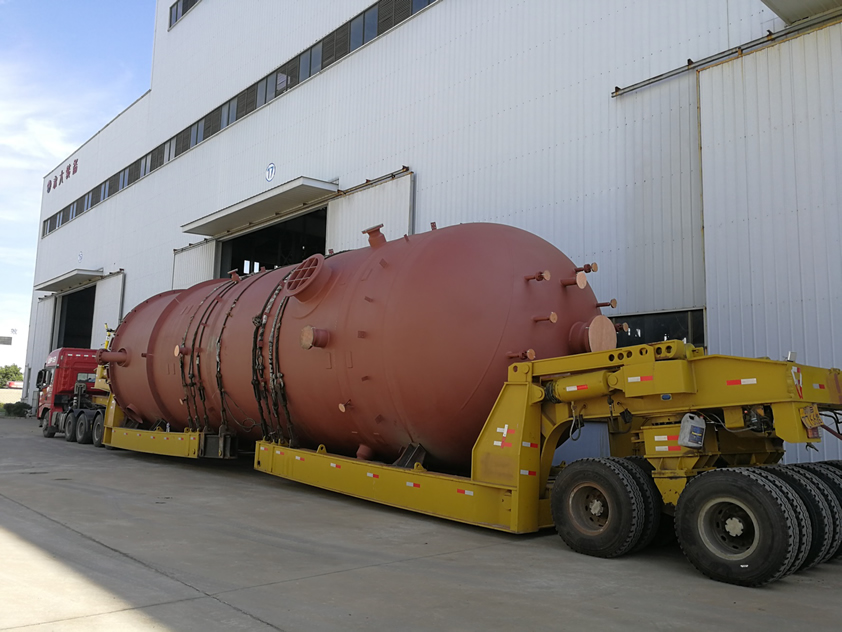
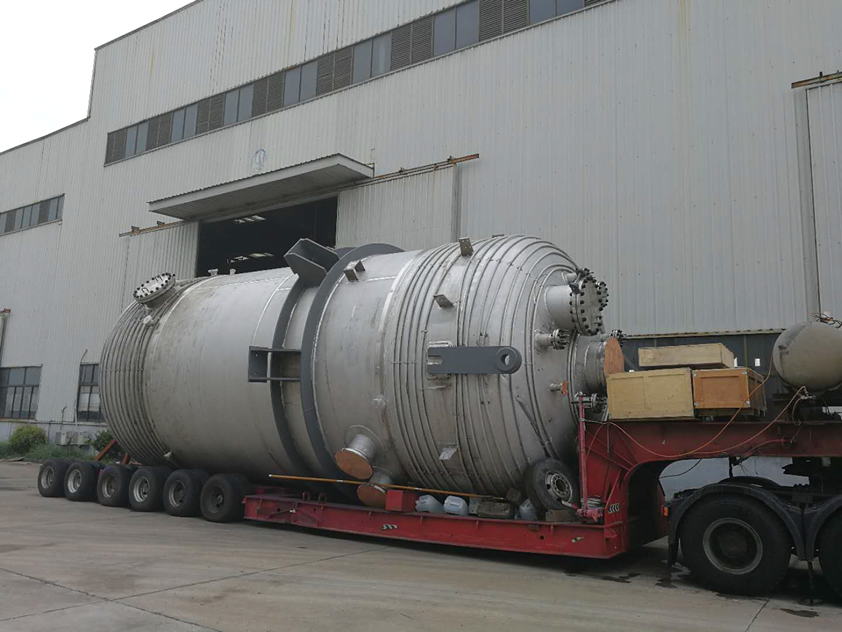
Use hydraulic axle modular trailers or low-bed semi-trailers.
-
Obtain an overweight/oversized transport permit (if diameter > 4m or length > 22m).
-
Consider segment transport (e.g., heads and shell separately) with on-site welding if necessary.
-
Place rubber pads or sleepers between the equipment and vehicle; secure with chain hoists and steel wire ropes.
-
Control speed at 40-60 km/h; avoid sharp braking and violent bumps.
-
Position nozzles vertically upward; never invert or place on side.
-
-
Rail Transport
-
Suitable for overweight equipment but limited by railway gauge (diameter generally < 3.5m).
-
Use Type D or heavy-duty freight cars; center of gravity deviation ≤ 100mm from vehicle center.
-
Secure with wire ropes and tensioners per *TB/T 3079.5*.
-
-
Sea Freight (Export / Long-distance)
-
Secure on deck or in hold with heavy-duty lashing and welded stoppers.
-
Use bulk carriers or heavy-lift vessels; deck barges for oversized dimensions.
-
Perform sea lashing calculations to prevent movement in waves.
-
Apply anti-salt-fog treatment to external packaging.
-
Use integral steel skids with fork holes and lifting lugs.
-
Apply marine anti-rust paint or vacuum packaging with aluminum foil composite film.
-
Store preferentially in the middle of the bottom hold; separate from bulkheads using airbags or wooden wedges.
-
-
Multimodal Transport
-
Combine road, rail, and water transport with pre-planned loading/unloading and transfer plans.
-
-
Special Transport (Ultra-large Equipment)
-
Use modular transport (separate shell, channel head, tube bundle) with on-site assembly.
-
Use self-propelled modular transporters (SPMT) for yard transfer and ro-ro terminal loading.
-
Use deck barges for inland river projects directly to the foundation, offloaded with large crawler cranes.
-
-
Corrosion Protection for Long-term Transport
-
If transport exceeds one month, periodically spray rust preventive oil to maintain passive film stability.
-